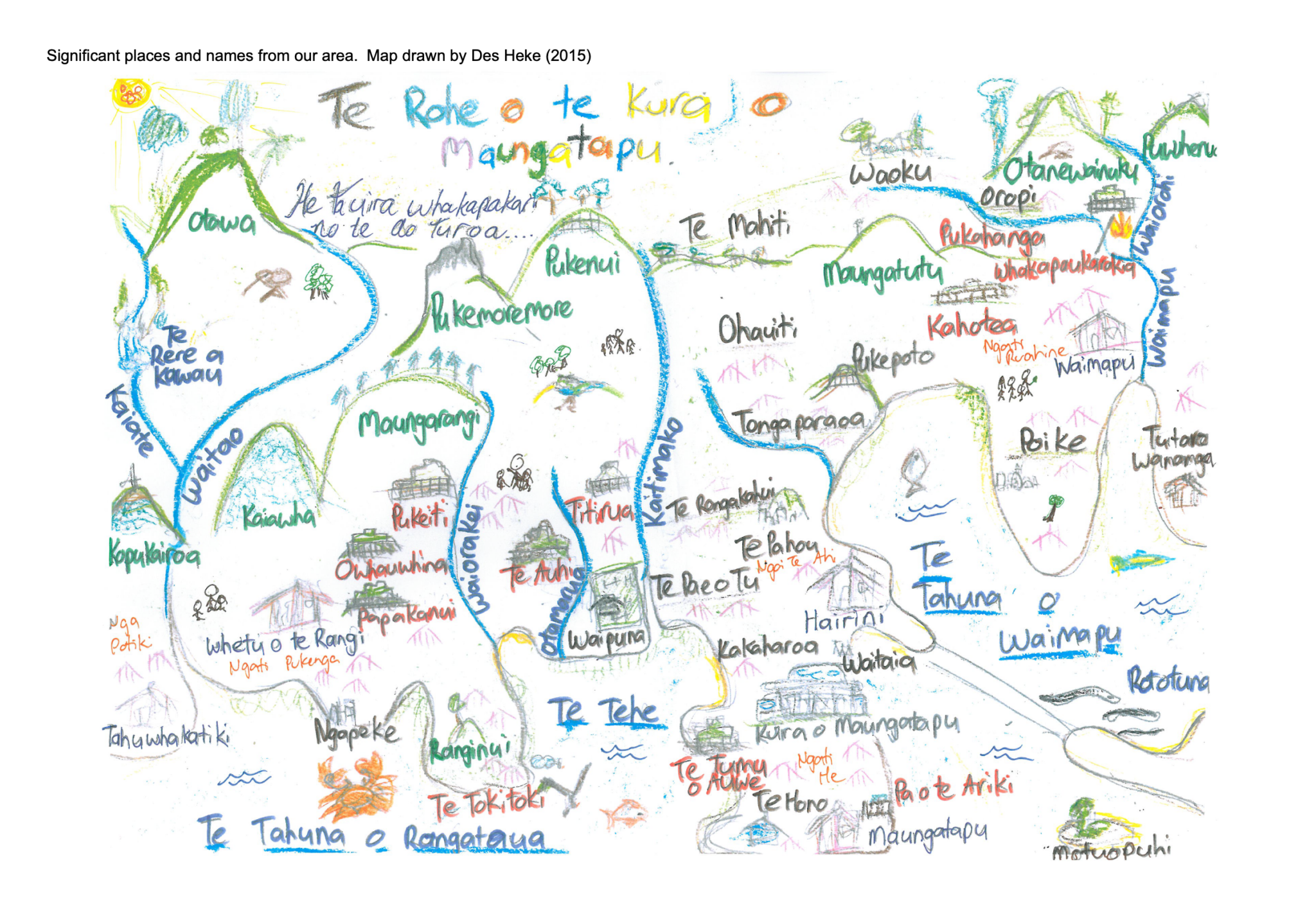
History of Maungatapu

Te Hītori

History of Maungatapu

Maungatapu Primary is a School that has a rich and valued history. Over 130 years old, Maungatapu School has seen and experienced many changes in how our world and society function. It has grown with the change and still holds many of the founding principles within the culture of the school.

1881 4 July 1881 – Date of Establishment at Anglican Church on Te Hono Street. Opening Roll was 26. Mr JW Dufus was Headmaster.
1881 Local Maori Ngati He, offered 2 acres of land for a school site to Education Department. A classroom and teacher ‘s residence was built and the site was known as “Mara o Tatahu” on the north east side of the Maungatapu Peninsula.
1882 Construction began. Completed January 1883.
1884 Cpt Morgan was Headmaster helped by his wife. He established a side school in an old church at Ngapeke. Mrs Morgan continued at Maungatapu.
1888 8 pupils at Maungatapu, 31 at Ngapeke.
1889 Mr Griffin was Headmaster and in April Maungatpau was clased as all tamariki went to Ngapeke.
1890 Re-opened with 17 pupils
1895 Tribal migration and low numbers caused the closure of Maungatapu Native School.
1898 Maungatapu School House moved to Papamoa.
1908 Petition for re-establishment of Maungatapu Native School. A new site was gifted of 3 acres at present site of school.
1913 School completed and open with Head Teacher Miss Baker assisted by Miss Geissler.
1914 Miss Baker resigned and Mr Roach became new Head Teacher in October. Roll 82.
1922 Roll 65, of which 25 are pakeha.
1937 Roll numbers saw a new detached open air classroom built, which is the current Puwhariki Unit.
1949 Tennis courts and driveway were tarsealed.
1953 Roll 116 pupils.
1956 Additional 2 acres acquired for play area.
1962 Maungatapu Maori School Disestablished. A new public school under the control of the South Auckland Education Board. Roll 126 pupils.
1965 New Classrooms built and new admin block which is part of Rangiatea. Renovations to original classrooms.
1968 Construction of swimming pool.
1969 Two new classrooms.
1974 Two new classrooms. Roll 400 pupils.
1976 Library set up and two relocatable classrooms were added. Roll 512 pupils.
1979 Welcome Bay School Opened. 170 pupils left Maungatapu which relieved the pressure which had peaked in 1977 with 575 pupils.
1982 School roll 330 pupils.
1984 Te Kohanga Reo discussed provision for Kohanga reo children.
1987 Local Maori visit school to discuss provision for children in the Máori language and culture. Class opened to focus on promotion Te Reo and Máori Culture.
1988 Unit received official Bi-Lingual status.
1989 Election of first Board of Trustees.
1990 School Carpark complete.
1995 New playground constructed at front of school.
1998 New school and community hall and new administration block.
1999 New classroom.
2000 New classroom.
2001 Library becomes a classroom.
2002 Mel Donovan retired with Sue Horne appointed as new Principal of school.
2002 New Library
2004 A two classroom block relocated in school to build Whare Toi.
2005 Rangiatea completed, attached to Old Admin block
2006 Pūwhāriki classrooms renovated to have 3 classrooms and changing of toilets and book room.
2006 125 year anniversary celebrated by school and community on school grounds.
2007 School hosts Ra Whakangahau Kapa Haka festival.
20011 Maungatapu is a Decile 5 school that has 23 classrooms, catering for new entrant through to Year 6. There are 3 classrooms in the Puwhariki unit. The role sits at 460 pupils.The school is divided into house groups, which are: Arataki, Rangitane, Ikatere, Tangaroa and Awanui.
2013 School Dental Clinic closed. Two 21st Century classrooms in the Senior Syndicate Room 15 & 16 with a karakia opening service.
2002 Term 1: Library repaired with a new roof. Term 2: Under construction- Two more 21st Century classrooms in the Middle Syndicate Room 13 and 14. Term 3: 21st Century classrooms in the Middle Syndicate Room 13 and 14 with a karakia opening service
2015 A new role, Dual Medium Leader is created, with Ngaire Paki, appointed, with the support of iwi.
2015 Dental Clinic and Old Library (used as a classroom) removed from site
2017 Two new roll growth classrooms.
2018 Retirement of Principal, Sue Horne, at end of Term 4 (Roll 595)
2019 Appointment of new Principal, Tane Bennett (ex student)
2019 Room 18 and 19 modernised
2019 Kapa haka rōpu qualifies for the Nationals through the Regional Competition for the first time in history
2020 New School Logo introduced.
2020 School Donation Scheme introduced by Government to enhance free education. Schools with a decile rating between 1-7 qualify (and later with an Equity Index greater than 432)
2020 Covid 19 Pandemic; school experiences lockdowns.
2020 Old Administration Block and Rangiatea is demolished is make way for two new rollgrowth classrooms.
2020 Rooms 1,2,3 fully renovated for the second time and blessed. New name for the classroom block is; ‘Te Whare Moemoeā o Te Pūwhāriki’.
2022 Kapa haka rōpu qualifies for the Nationals for a second time through the Regional Competition.
2023 Kapa haka group attends National Competition in Nelson, for the first time (as 2020 nationals cancelled due to pandemic), achieving unprecedented success.
2023 Decile Rating System is replaced with a Equity Index System. Maungatapu School is 469 on the scale (ranging from 344-569). At the same time, a 50% increase to funding per student is given to MLP (Māori Language Programme L1).
2023 6 Nov – roll hits 600 for the first time
2023 2 new roll growth classrooms – Block T on site of Old admin/Rangiatea. Design includes a new atea.
2024 At the request of local iwi, MoE approve enrolment of Rumaki Raukura Y7-8 reviewable in 2yrs with students capped to 30. Starting roll of 18
2024 Bike Track opens on school grounds, shared school and TCC project

Our Local Iwi / Hapu

Local Iwi and Hapu have a strong connection with this school. Not only of the history this school was founded, the school is very fortunate to have a Rumaki on the grounds.

Ngati Ranginui and Ngai Te Rangi

Our Local Iwi / Hapu

Ko Mauao te Maunga – Mauao is the Mountain Ko Takitimu Ko Mataatua nga Waka – Takitimu, Mataatua are our ancestral Canoes Ko Tauranga te Moana – Tauranga Moana is our sea Ko Ngati Ranginui, Ko Ngai Te Rangi, Ko Ngati Pukenga nga Iwi – Ngati Ranginui, Ngai Te Rangi, Ngati Pukenga are our Iwi

Ngati Ranginui

Ngati Ranginui are the descendants of ancestors who arrived on the Takitimu Waka, lived and settled in Tauranga in the Bay of Plenty hundreds of years ago. Their ancestor Tamatea Arikinui conducted the rituals and ceremonies of the arrival at Mauao. Over many generations, these ancestors and their descendants established villages, fortifications, burial grounds, fishing areas and forest places. These lands and waters have been confiscated following the land wars 1865. Today the tribal groups only retain a fraction of their once vast estates. They express the relationship with their ancestral lands by maintaining marae, retaining remnant reserves and keeping the identity and customary rights and practices alive (expressed from website Ngati Ranginui).

Ngai Te Rangi

Ngai Te Rangi is a Mataatua tribe. They have a rich history which began from our journeys from the East Coast. After many battles, Ngai Te Rangi resided in Whangara, then Opotiki, and through intermarriage and many grueling battles, finally settled where we are today in Tauranga Moana. Their historical journey is known as Te Heke o Rangihouhiri. They were originally called Ngati Rangihouhiri but after the ancestor Te Rangihouhiri died in one of the country’s most bloodiest battles – Poporohuamea, his brother Tamapahore, led and renamed us Ngai Te Rangi. With the arrival of Europeans to this region, it was the Battle of Gate Pa which changed our city forever. The leaders of that time Rawiri Puhirake and Henare Taratoa lost their lives fighting for their people, and survival. Ngai Te Rangi has survived and flourished. Ngai Te Rangi have 11 operative Marae and 11 affiliated Hapu located as far north as Katikati through to Te Tumu in the east and on the islands of Matakana, Tuhua, Motiti and Rangiwaea and is the largest of the three Iwi that have settled in the Tauranga Moana (expressed from website Ngai Te Rangi).
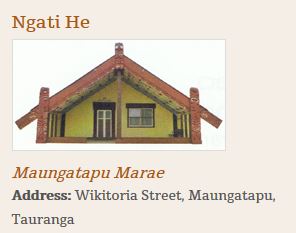
Ngati He

Ko Wairakewa te Wharenui

Ko Te Ao Takawhaaki te Wharekai

Ko Opopoti te Marae

Ko Ngāti Hē te Hapū
Waiho ma nga papaka o Rangataua koe e mihi. He paruparu te kai he taniwha te tangata – Tihei mauri ora!

Ngai Te Ahi

Ko Mauao te Maunga

Ko Awanui te Moana

Ko Takitimu te Waka

Ko Tamatea Arikinui te Tangata

Ko Ngāti Ranginui te Iwi

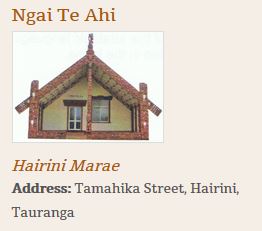
Ko Ngāi Te Ahi te Hapū

Ko Hairini te Marae

Ko Tamahika te Tangata

“Mai ngā ngārehu o Whakapaukarakia, kei te kā tonu Te Ahi”

“From the embers of Whakapaukarakia the fire burns on”

The original name of the Hairini area was Ohau. For generations, Ngāi Te Ahi has occupied the lands of Hairini, Ohauiti, Kaitemako, Poike, Waoku and parts of the Waimapu and Taumata. They share these areas with neighbouring whanau and hapu of Ngāti Ruahine, Ngāi Tamarāwaho and Ngāti He.

For more information about local Iwi, Hapu and Marae, visit this website: Tauranga Moana Maori Trust Board.